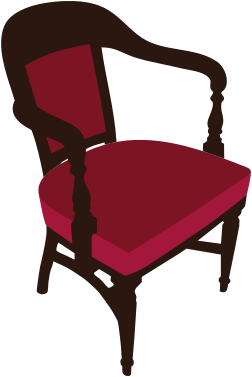
Furniture, rebuilt by hand the way it was first made.
Kim Buckminster restores antiques with horsehair, hand-tied springs, stitched edges and leather, and brings the same care to everyday sofas, vehicle seats, restaurant booths and woodwork. He has worked at the bench in Falls City, Nebraska since 1977.
- In the upholstery trade since 1975
- Two IFAI International Achievement Awards for upholstery
- Work in the Nebraska State Capitol and the Schuyler Historical Society Museum
- More than 100 free upholstery videos, followed by over 38,000 people on YouTube
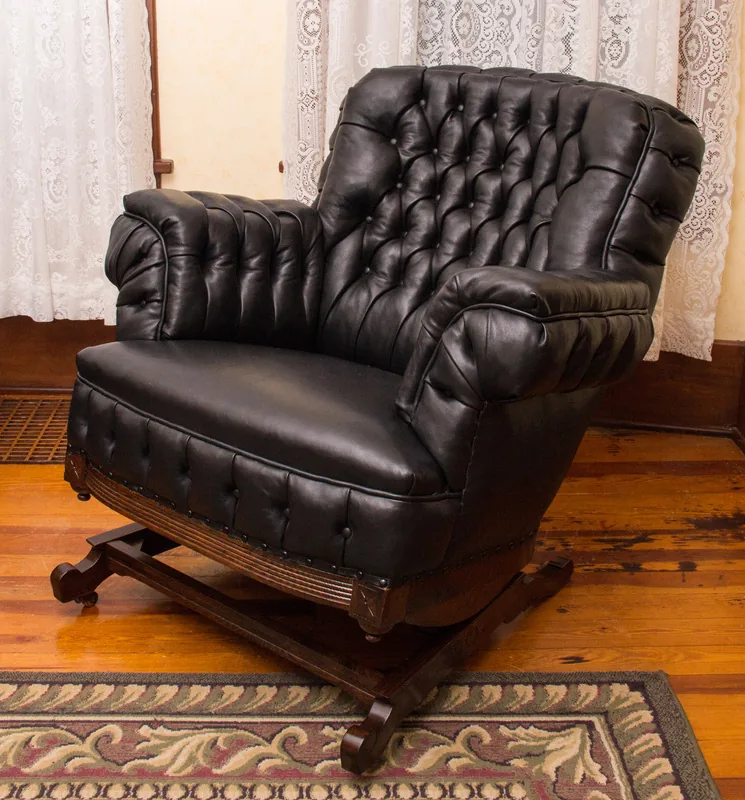
One chair, layer by layer
A traditionally upholstered seat is built in layers, each one doing a specific job. Scroll to see how one of Kim's 1920s parlor chairs went back together.
- 1 of 7
Frame and webbing
The frame is stripped, repaired and re-glued. Then jute webbing is stretched tight across the seat and woven over and under to carry everything above it.
- 2 of 7
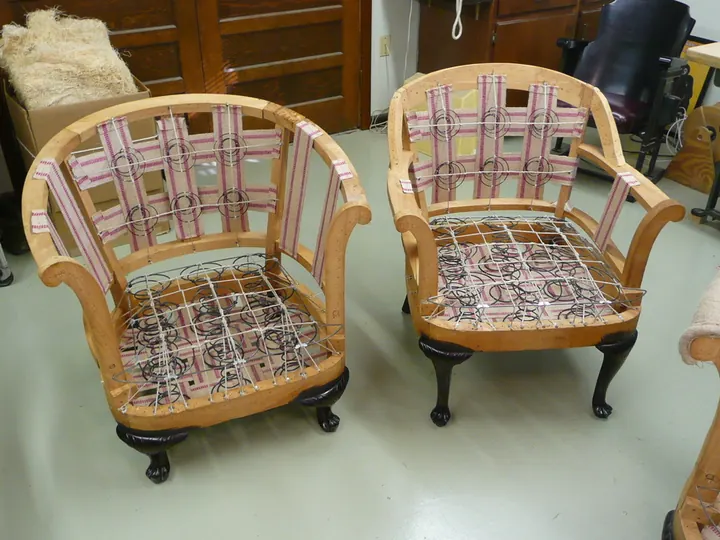
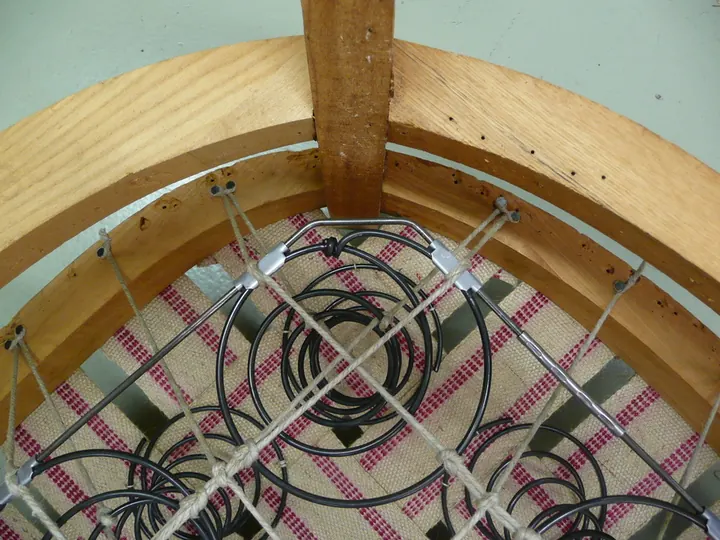
Springs, tied by hand
Coil springs are sewn to the webbing and tied with twine in eight directions, so each spring supports its neighbors and the seat stays level for decades.
- 3 of 7
Burlap and first stuffing
Burlap goes over the springs, then the first stuffing. It is regulated with a long needle to remove lumps and fill the hollows.
- 4 of 7
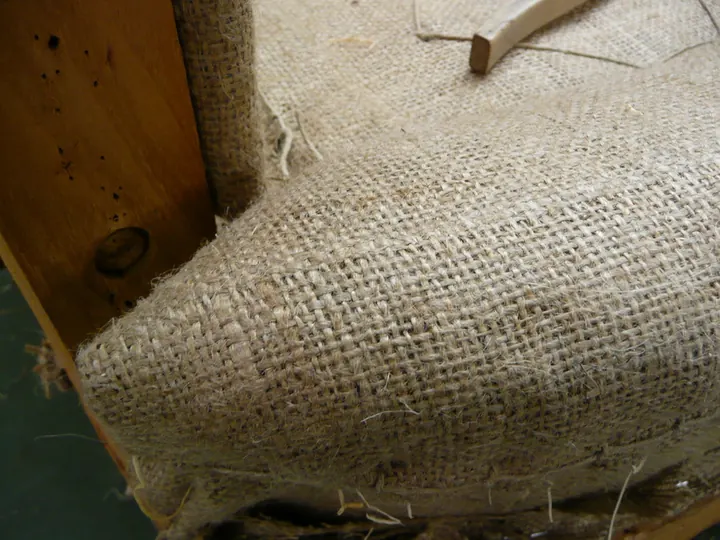
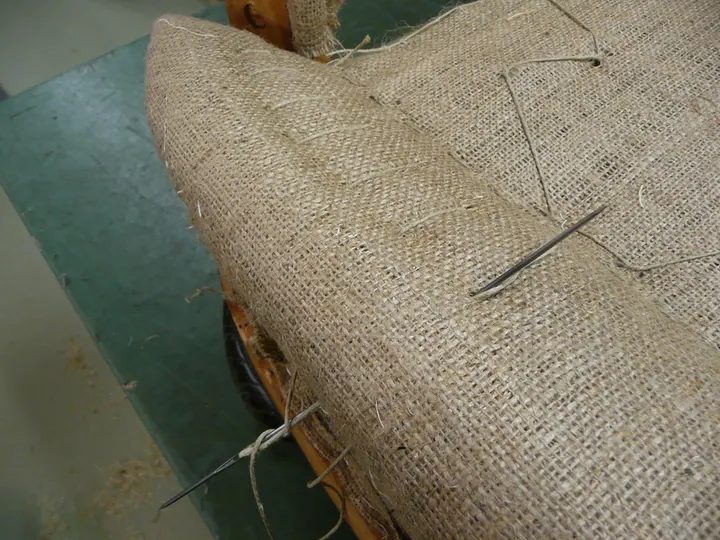
Stitched edges
Rows of blind and top stitches pull the stuffing into a firm roll along the front edge. This is what gives a traditional seat its crisp shape.
- 5 of 7
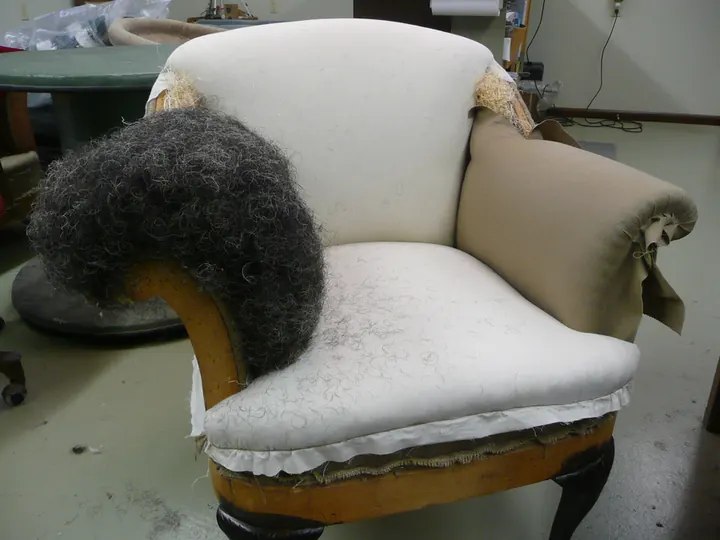
Horsehair
Curled horsehair is teased and laid on as the second stuffing. Its springy curls breathe, hold their loft, and can be cleaned and reused.
- 6 of 7
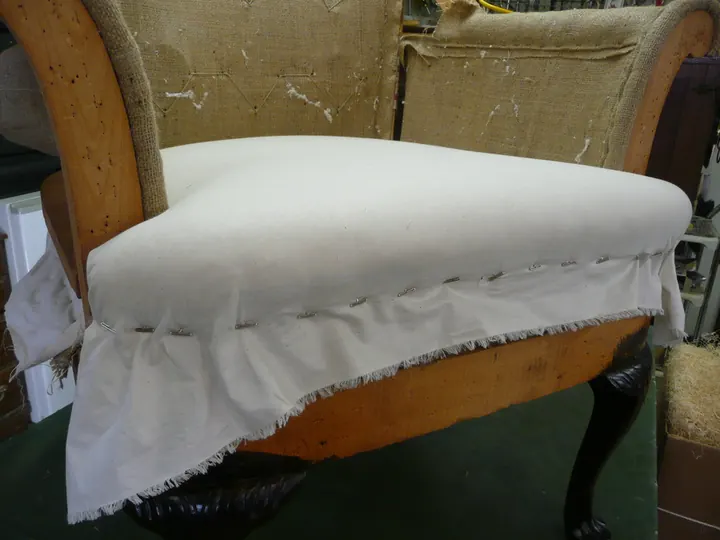
Muslin and cotton
A muslin cover pulls everything into its final shape. Cotton felt goes on top to soften the surface and keep hair from working through.
- 7 of 7
The finished cover
Only now does the show fabric or leather go on, along with the welt, gimp or nailhead trim that finishes the edges.
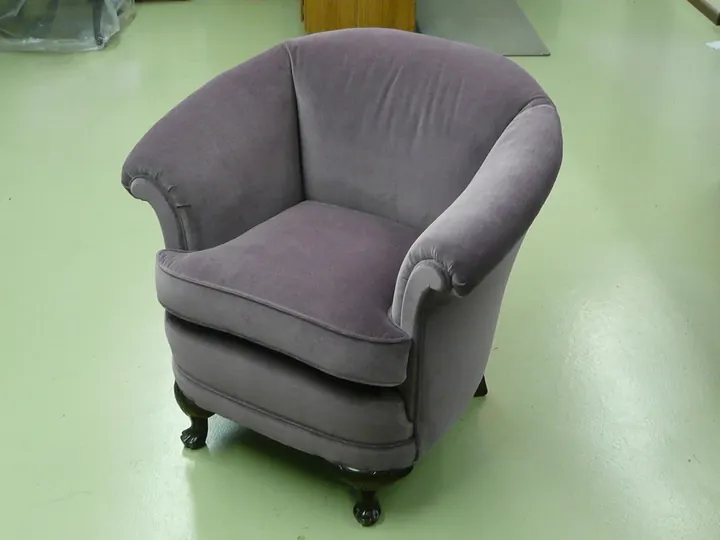
Most shops replace all of this with foam and staples. Kim rebuilds it the way it was made, which is why his work lasts for generations.
Selected work
Museum pieces, a state capitol commission, family heirlooms and everyday furniture.
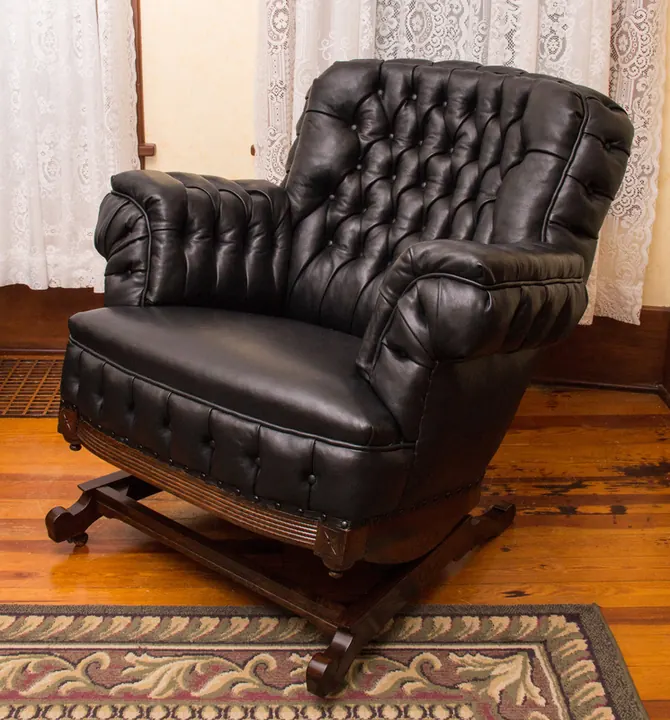
1890s Turkish Rocker
One of the original twelve apostles' chairs from the temple in Salt Lake City, restored to match archival photographs.
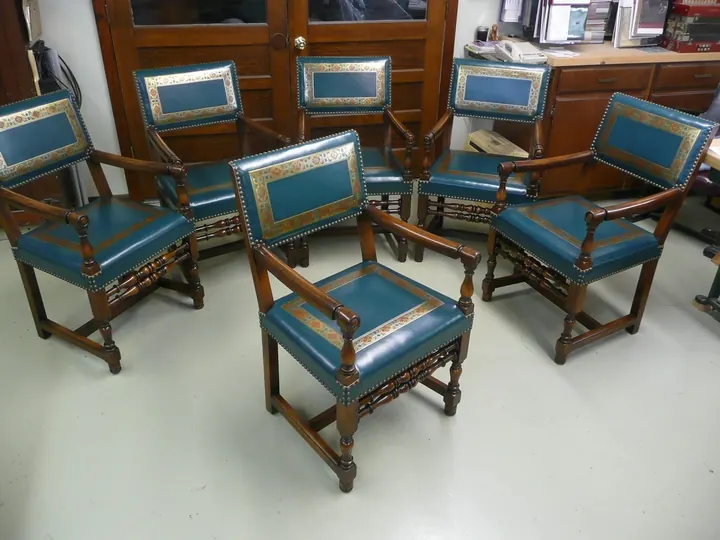
Nebraska State Capitol Governor's Hearing Room
A set of armchairs for the Governor's Hearing Room, in teal leather with gilded borders.
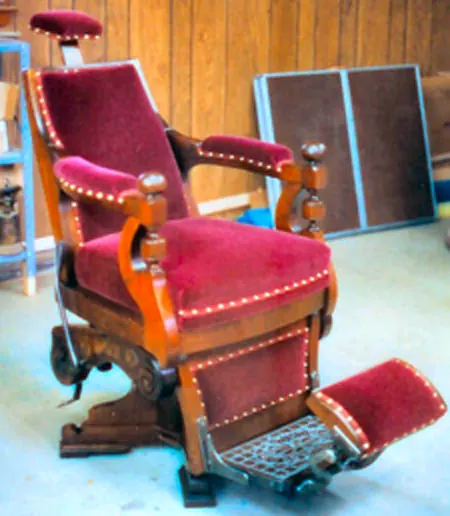
1895 Melchior Barber's Chair
A massive 1895 barber's chair from a shop in Schuyler, Nebraska, now on display at the town's historical museum.
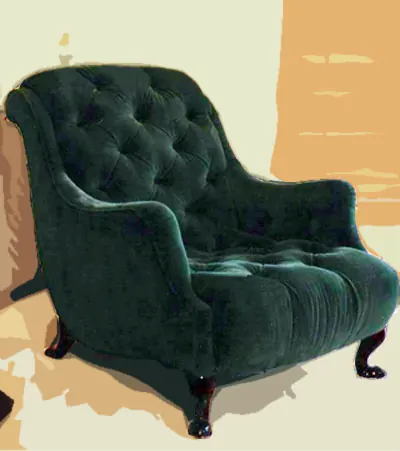
Sleepy Hollow Chair
A button-tufted Victorian easy chair rebuilt with a horsehair and down interior.
Parlor Set, Circa 1920
A matched settee and pair of tub chairs, rebuilt layer by layer in traditional materials.
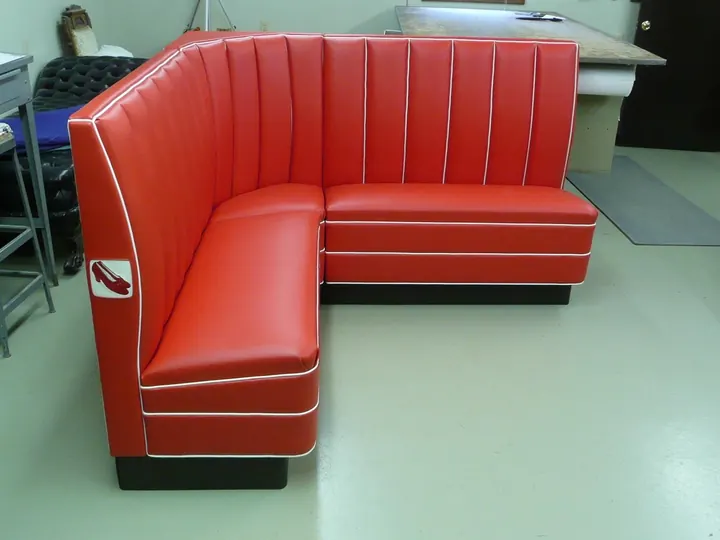
1930s-Style Diner Booth
A corner booth in 1930s diner style, upholstered in red channel tufting with white welt trim.
More than antiques
The same hands and the same standards go into everyday work.
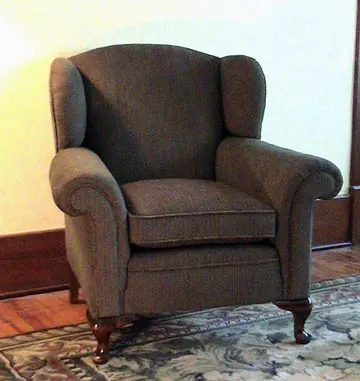
Modern furniture and cushions
Sofas, recliners, dining chairs and worn cushions, rebuilt with new foam, padding and fabric.

Car, truck and motorcycle seats
Torn, split and sagging seats repaired or fully recovered in vinyl, leather or fabric.
Booths and commercial seating
Restaurant booths, office and business seating, reupholstered and repaired.
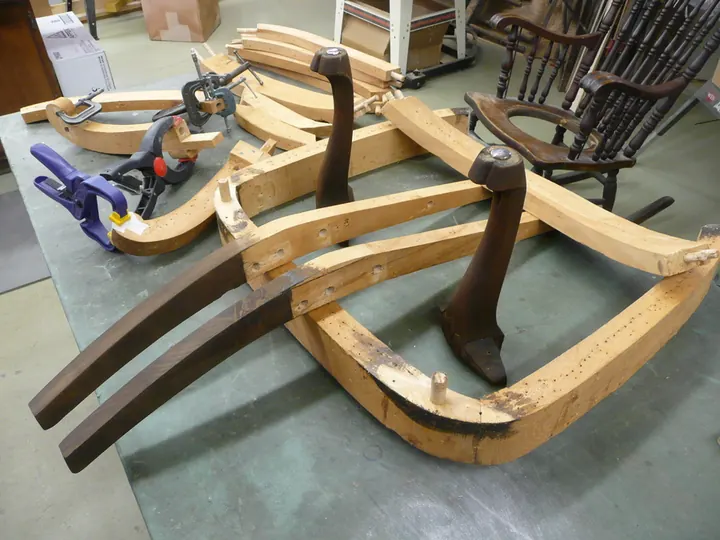
Woodworking and refinishing
Frame repair, refinished show wood and restored hardware.
Learn from the bench
Since 2012 Kim has filmed his restorations step by step and shared them free on YouTube. Upholsterers, students and do-it-yourselfers use them to learn traditional methods.
Kim's latest upload to YouTube: How to Refinish an Oak Rocking Chair
The traditional craft
Every antique job starts with the frame and finishes with the trim. Here is what happens in between.
Antique restoration
Victorian, Arts and Crafts and early twentieth century pieces, rebuilt with the materials and methods they were made with.
Traditional upholstery
Jute webbing, hand-tied springs, stitched edges, horsehair and cotton. Built to last for generations.
Leather and trim
Hand-sewn leather, deep button tufting, welt, gimp and brass nailhead trim.
Frame repair
Loose joints re-glued, broken rails replaced and show wood refinished as part of the work.
What clients say
“Kim is a master craftsman. Nice guy, too!”
Nancy, Google and Facebook reviews
“Master craftsman with lots of historic information repairing furniture.”
Gilbert, Google and Facebook reviews
“Excellent video tutorials and customer service!”
Charleen, Google and Facebook reviews
Visit the shop
The shop is in Falls City, in the southeast corner of Nebraska, about two hours from Omaha, Lincoln and Kansas City.
2123 Clifton AvenueFalls City, Nebraska 68355
Open by appointment. Call 402-245-3542 to set a time.
Get directions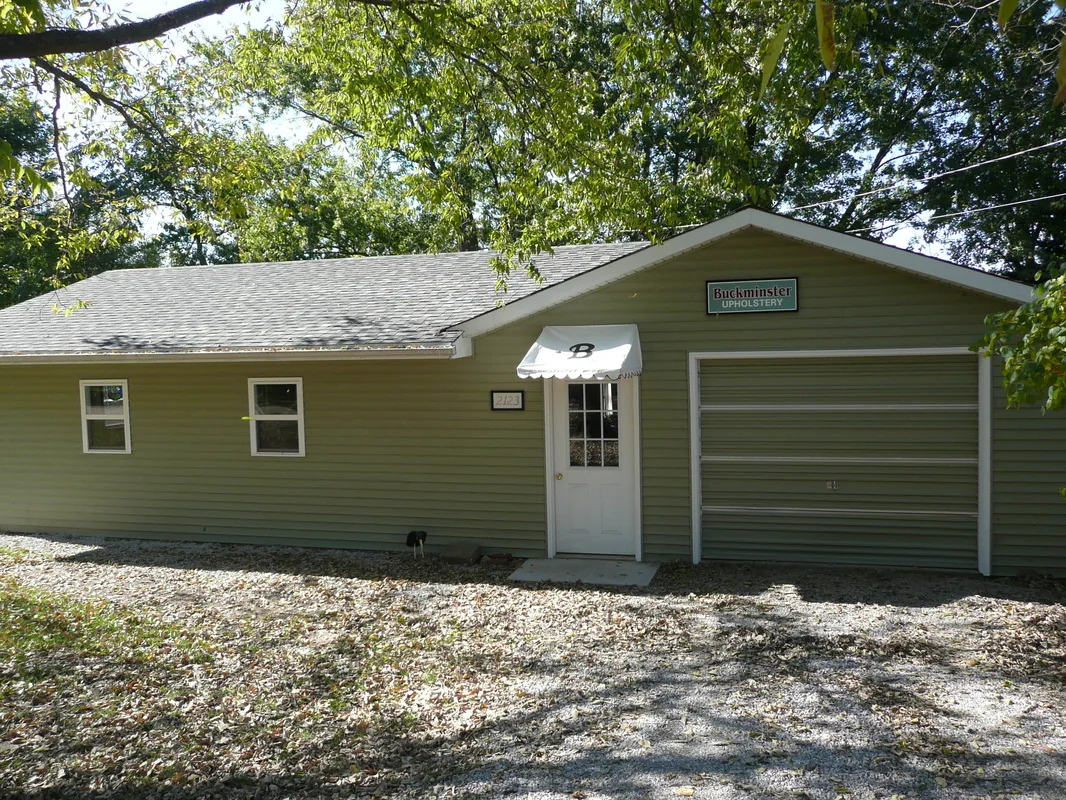
Have a piece that needs this kind of care?
Send a few photos and a short description. Kim will look them over and reply with next steps.